
The mark-up vs margin mistake quietly costing trade businesses profit!
Most trade businesses think they lose money during the job.
Labour blows out. Materials cost more. Something goes wrong.
But the reality is simpler.
The profit was already gone before the quote was sent.
.
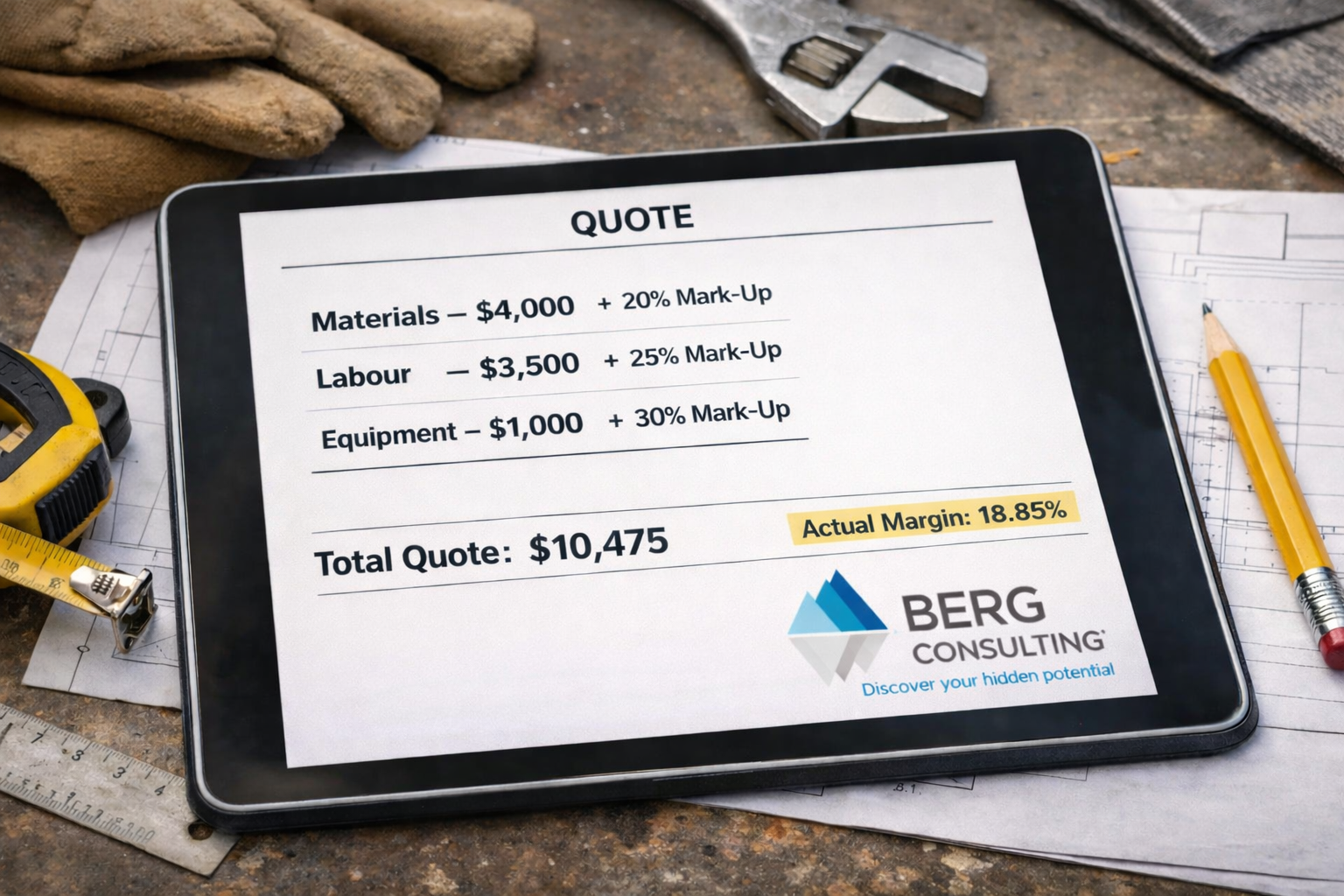
A lot of tradies price work like this:
Add up the costs.
Throw a percentage on top.
Send the quote.
Maybe it’s:
20% on materials - 25% on labour - 30% on equipment
It feels reasonable.
The problem is that percentage is usually mark-up, not margin.
And if you think they are the same thing, your pricing is already off.
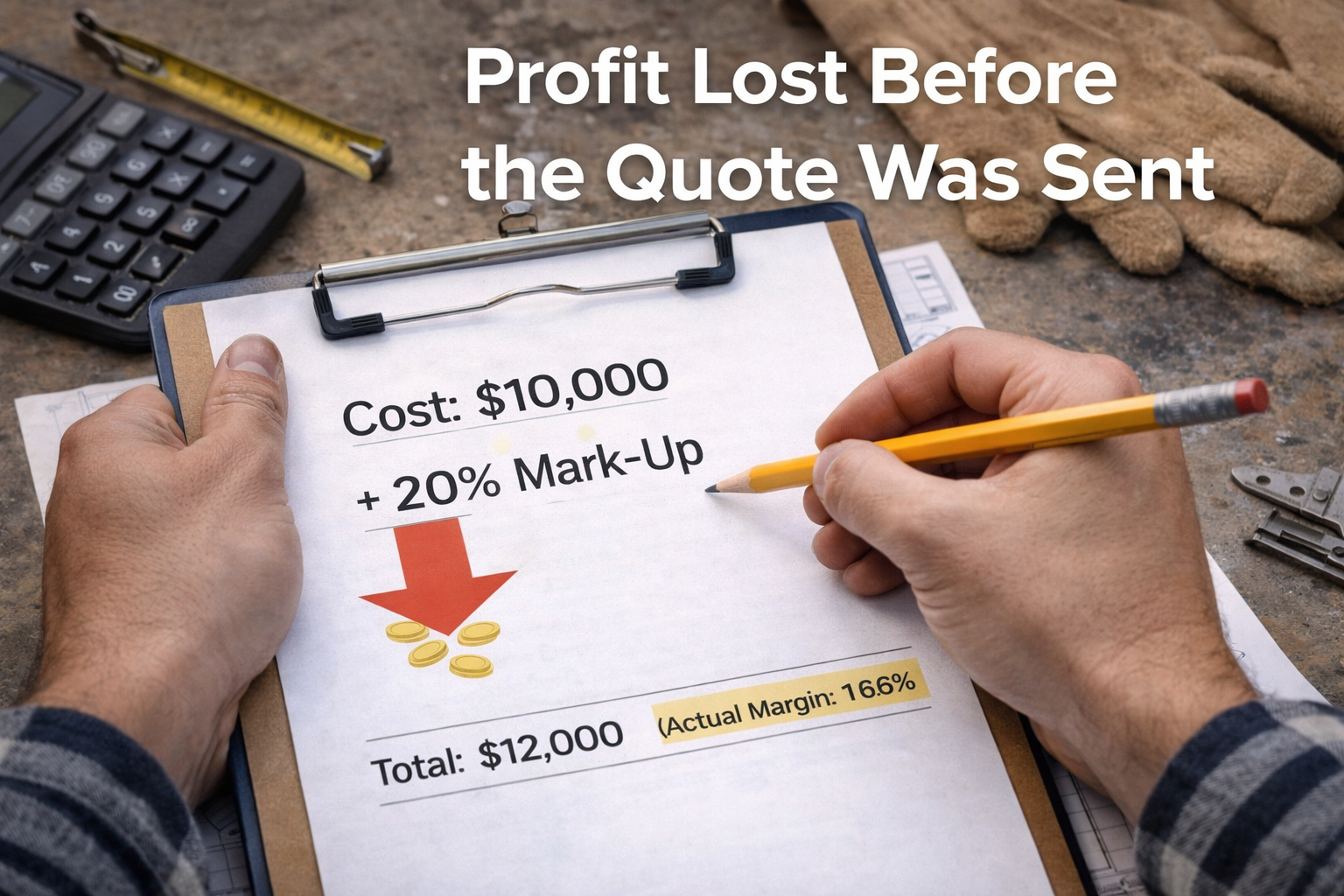
When pricing is built on the wrong assumption, the job starts with less profit than you think.
So when the job is underway and normal things happen like:
Labour runs slightly longer - Materials cost a bit more -You spend time managing the job - Admin, vehicles, insurance and overheads hit.
The profit disappears.
This is why many trade businesses say things like:
“We’re turning over good money but there’s nothing left.”
They blame the job.
But the real issue started earlier.
The quote was never strong enough in the first place.
Because margin is what actually runs the business.
From that margin you still need to pay for things like:
- vehicles
- insurance
- admin and office costs
- quoting time
- project management
- business profit
If the margin is too small, the job can look profitable on paper but still struggle to support the business.
.
That is why better businesses think in margin, not just mark-up
Mark-Up
Is the percentage you add on top of the cost of a job.
It answers the question:
“What should I add to the cost?”
Margin
Is the percentage of the final sale price that becomes gross profit for the business.
It answers the question:
“How much of this job does the business actually keep?”
Simple Example
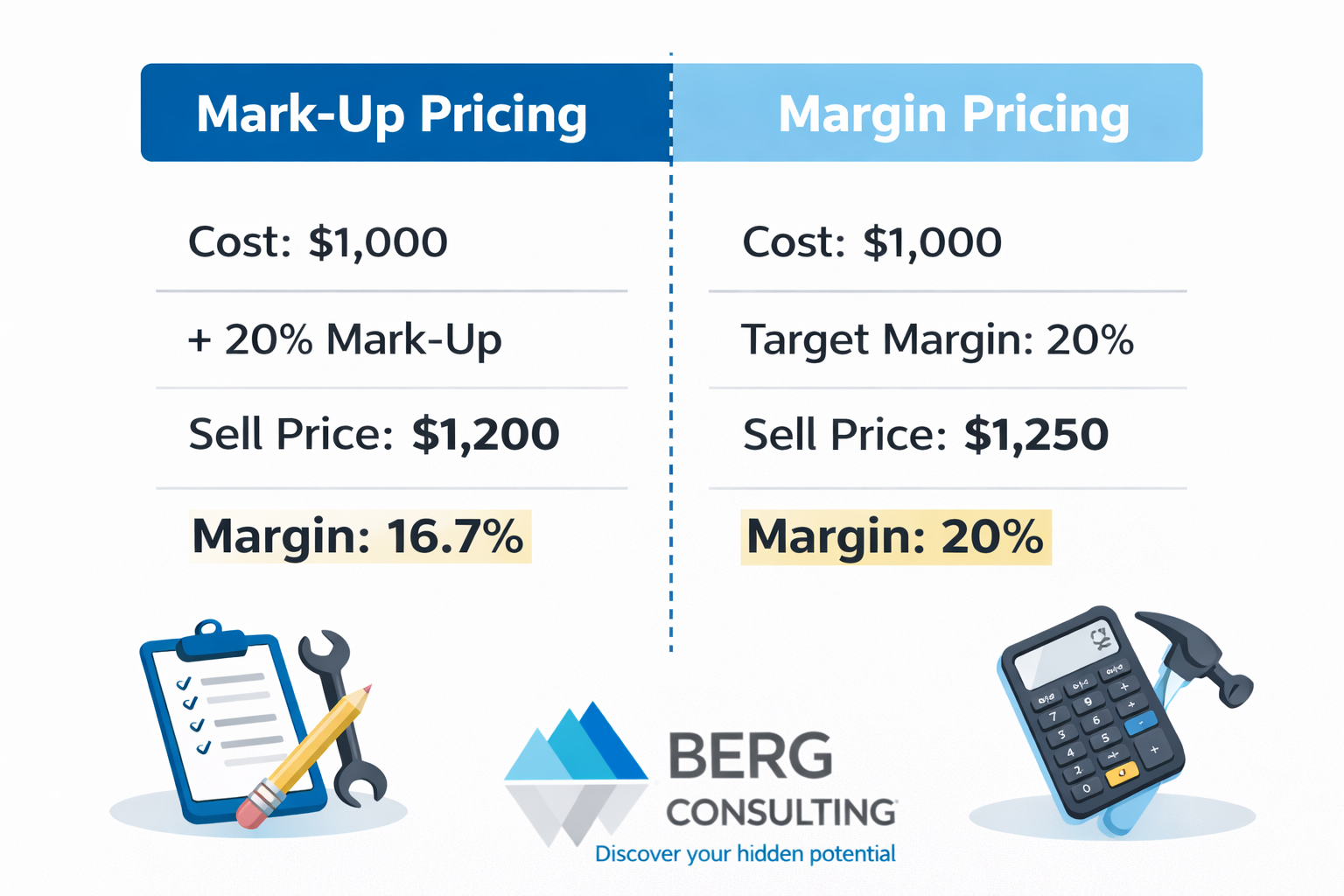
Job cost: $1,000
If you add 20% mark-up
Sell price = $1,200
Profit = $200
But the margin is not 20%.
It is:
$200 ÷ $1,200 = 16.7%
That difference might not look big on one job.
But across dozens or hundreds of jobs a year, it becomes serious money.
When quoting, most tradies don’t price the whole job at once.
They build it up from individual line items like:
- Materials
- Labour hours
- Subcontractors
- Equipment hire
Each of those lines still needs to produce the margin your business requires.
So, the process is simple:
- Work out the cost of the item
- Decide the margin the business needs
- Work backwards to the sell price
Material cost = $100
Let’s say your business needs a 20% margin. First convert the margin into the number you divide by.
You do this by:
- Subtracting the margin from 100%.
- 100% − 20% = 80%
- Then convert that to a decimal:
- 80% = 0.80
Now calculate the sell price.
- Sell Price = Cost ÷ 0.80
- $100 ÷ 0.80 = $125
So the quote line becomes:
Material supply = $125
That gives:
Profit = $25
Margin = 20%
Example: Labour Line
Labour cost = $80 per hour
Target margin = 20%
Sell price =
- $80 ÷ 0.80 = $100 per hour
So, your labour rate becomes $100/hour.
Why this matters:
Many tradies do this instead:
Cost = $100
Add 20% mark-up → Sell for $120
But that only produces 16.7% margin, not 20%.
That small gap repeated across every line item in every quote slowly erodes the profitability of the entire job.
The Shift
When you measure properly:
Pricing becomes intentional
Problems show up early - Decisions get faster - Profit becomes predictable - You can improve your business using real information
You stop reacting to results. - You start controlling them.
This is the same idea discussed in the previous blog about measuring your business properly.
Tracking things like:
- labour hours vs quoted hours
- material costs vs estimate
- job performance
- gross profit %
Understanding margin is simply another part of measuring the business.
Need Help?
If you want help pricing jobs properly, I’ve created a simple tool for trade businesses.
It includes:
- A pricing template
- A mark-up vs margin reference guide
- A quick way to check if your quotes produce the margin, you think they do
Beause when you understand the numbers behind your business, you start unlocking its hidden potential - and the next level of performance
Download it here.